Walking is often overlooked when it comes to weight loss, but it’s actually one of the easiest, most sustainable ways to burn fat. Unlike complicated workouts or strict diets, walking is free, low-impact, and fits into almost any lifestyle.
In this guide, you’ll learn how to lose weight by walking effectively, avoid common mistakes, bust myths, and turn walking into a fat-burning habit that lasts.
Why Walking Works for Weight Loss
Walking may seem gentle, but when done consistently, it can burn calories, boost metabolism, and help you shed fat. Here’s why it works:
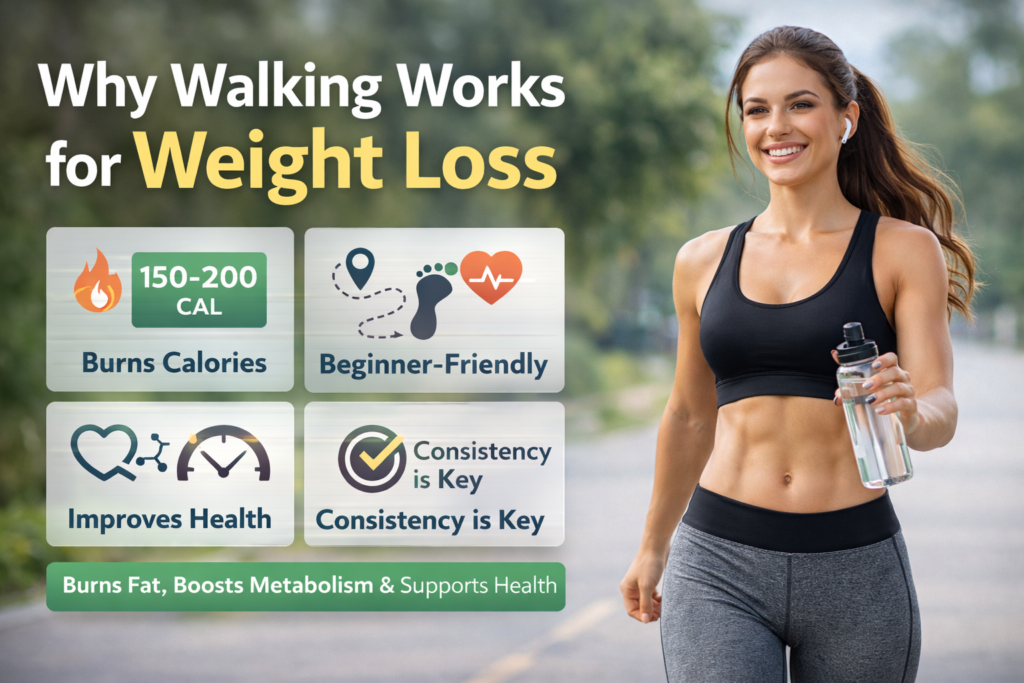
- Burns calories efficiently: A brisk 30-minute walk can burn 150–200 calories, depending on your weight and pace.
- Sustainable and beginner-friendly: Walking is easy on your joints, making it easier to stick with long-term compared to running or high-intensity workouts.
- Improves overall health: Regular walking supports heart health, improves circulation, reduces stress, aids digestion, and even promotes better sleep.
Consistency is key. Walking might not burn as many calories per minute as running, but doing it daily and gradually increasing intensity makes it a reliable, beginner-friendly fat-loss tool.
How to Walk Effectively for Fat Loss
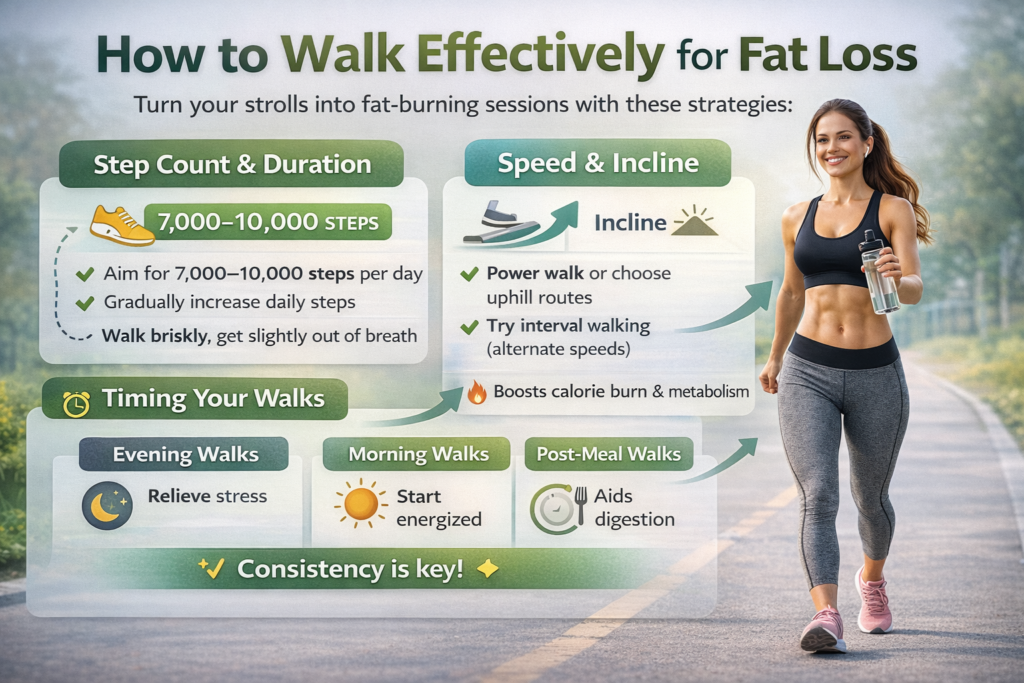
Not all walking is created equal. Follow these strategies to turn your strolls into real fat-burning sessions:
Step Count and Duration
Aim for 7,000–10,000 steps per day. If you’re just starting out, even 5,000 steps is enough.
Over time, gradually increase your daily steps. Brisk walking—enough to raise your heart rate and make you slightly out of breath—is much more effective than a slow stroll.
Speed and Incline
Adding power walking, uphill routes, or treadmill inclines can significantly increase calorie burn.
You can also try interval walking, alternating between slower and faster paces for a metabolism boost.
Timing Your Walks
There’s no “perfect” time to walk. The important thing is consistency:
- Evening walks: Great for stress relief and winding down.
- Morning walks: Energize your day and kickstart metabolism.
- Post-meal walks: Help digestion and reduce cravings.
Common Mistakes People Make
Even with walking, people sometimes struggle to see results. Avoid these errors:
- Walking too slowly: A casual stroll won’t burn much fat. Pick up the pace to challenge your body.
- Skipping consistency: Sporadic walking won’t give long-term results. Daily effort matters more than long sessions once in a while.
- Ignoring diet: Walking can’t outmatch poor eating habits. Pair it with a balanced, mindful diet.
- Not varying intensity: Doing the same route at the same pace can cause a plateau. Mix up pace, distance, or terrain for better results.
Walking Myths vs Facts
There are plenty of misconceptions about walking and weight loss:
| Myth ❌ | Fact ✅ |
|---|---|
| You need to run to lose fat. | Brisk walking can burn a significant number of calories, especially when done consistently. |
| Walking alone guarantees weight loss. | Walking works best when combined with a balanced diet and good sleep. |
| Longer walks always mean better results. | Quality over quantity matters. Intensity, posture, and consistency are more important than walking excessively. |
Actionable Steps to Lose Weight by Walking
Here’s a simple step-by-step plan to make walking effective for fat loss:
- Set realistic goals – Start with 30 minutes daily or 5,000–7,000 steps. Gradually increase as you progress.
- Track your progress – Use a smartwatch, phone app, or pedometer to monitor steps, distance, and calories burned.
- Include intervals – Alternate between normal and brisk walking to burn more calories.
- Pair walking with nutrition – Drink enough water, eat whole foods, and avoid processed, high-calorie snacks.
- Make it enjoyable – Listen to music, podcasts, or walk with a friend to stay motivated.
- Strengthen your body – Light exercises like squats, lunges, or core work improve posture and walking efficiency.
Beginner-Friendly Walking Checklist
- Aim for 30–60 minutes of brisk walking daily
- Walk at a pace that raises your heart rate
- Track steps or distance
- Stay hydrated before and after walks
- Mix up routes, inclines, or terrain to challenge your body
- Pair walking with mindful eating
Extra Tips for Faster Results
- Use a step tracker – Seeing your daily progress keeps you motivated.
- Walk after meals – A short walk after eating helps stabilize blood sugar and reduces cravings.
- Engage your core – Keep your posture upright and your abs slightly engaged for better calorie burn.
- Add light weights – Carrying small dumbbells or wearing a weighted vest increases intensity safely
Conclusion
Walking is simple, accessible, and surprisingly effective for fat loss when done correctly. The secret is consistency, pacing, and pairing it with a healthy lifestyle.
Start small, track your progress, mix up your walks, and make them enjoyable. With patience and dedication, you can lose weight, improve your fitness, and feel healthier—one step at a time.